

March language arts lessons can prove difficult.
The month is long. Spring is calling. A break is on the horizon. End-of-the-year administrative tasks loom. English language arts teachers might be exhausted from prep, and you can’t turn your classroom into a themed March Madness arena.
Still, we ELA teachers have work to do. In March, we have the opportunity to engage our students in meaningful and impactful language arts lessons. While it may be tempting to coast through the month, let’s challenge ourselves to finish strong.
One way to keep students engaged is by incorporating current events into our curriculum. March brings us Women’s History Month, where we can explore the incredible contributions of women throughout history. From literature and poetry to speeches and essays, there are countless opportunities to inspire our students with stories of resilience, courage, and leadership.
By March, worksheets and packets probably will not engage secondary students. Below, I’ve included ideas for celebrations throughout March.

What are some classroom projects that combine art and language arts for March?
By March, your classes have finished an independent reading book or two. They can create book reviews in several ways.
One option is to devote a bulletin board to celebrating finished books from the academic year. Ignore the aesthetic appeal! Let students decorate your board with
Another comprehensive book review can include critical thinking presentations, perhaps socioeconomic or historical applications.
Finally, the beginning of spring is the perfect time to share out beloved books from your classroom library. That way, you can send books home over summer break.
Recognize different skills to create better readers.
What are some easy lesson plan ideas for March in high school English classes?
The longer I teach high school, the more I see that my classes do not want to be shocked at what is on college standardized tests. As ELA teachers, we have writing, grammar, and reading—three huge chunks of a big test that our kiddos worry about. So, March is a great time to address nerves and boost confidence.
For writing, a great activity is to build confidence with various writing prompts. Whatever standardized test your state uses, you can find practice tests. Daily writing, no matter how small, can help.
Concerning grammar, add movement to your studying. Subscribers have access to my library where you can download free task cards.
With reading, remind students that they have completed close reading strategies all year; sometimes, they need reminders of their skills. Practice reading comprehension skills with short passages from Common Lit or practice tests. Allow students to work with partners or jigsaw larger passages.
How can I inspire during March language arts classes?
Acknowledging the excitement and the promise of warm weather and break goes a long way with classes. If possible, incorporate their excitement from outside sources into class lessons. Doing so tends to social emotional learning and builds a community of learners.

World Compliment Day
I did not know that World Compliment Day existed, but March first is it. Take advantage with a personalized writing activity. Ask students to write a few notes to teachers, coaches, administrators, or secretaries they appreciate.
If you have additional time, you can arrange for compliments to be sent to long-term facility centers or other community groups.
Overall, the month of March is creative writing prime time. Encourage your students to channel their excitement and energy into creative writing projects. Prompt them to explore different genres, such as short stories, poetry, or even historical narratives. You can provide them with prompts that incorporate the themes of spring, growth, and new beginnings.
Finally, consider sharing their work with others. Sharing words and compliments with other naturally incorporates SEL through the publication step of the writing process.

International Women’s Day
March is women’s history month, and International Women’s Day (March 8) “is a global day celebrating the social, economic, cultural, and political achievements of women.” Famous women like Ida B. Wells or Susan B. Anthony have articles and speeches for analysis and discussion. Not only will students learn history, but they will also practice their analytical skills.
If you are looking for other famous women to incorporate into your classes, consider looking at journalists, novelists, or activists. You can also introduce them to famous authors who were born in March, like Maya Angelou. Adding a quick analysis or video of a deserving woman adds positively to March language arts classes.
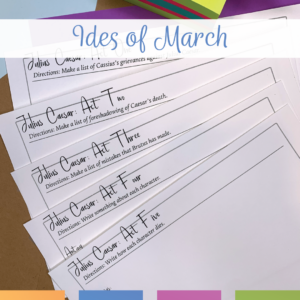
The Ides of March
When I regularly taught Julius Caesar, I would flip to March 15 to mark Act III, and then I’d backwards plan. Young thespians act out famous speeches, and everyone wonders why the eponymous character dies so early in the play.
Teaching about Caesar during March adds a touch of historical intrigue to your language arts lessons. Explore the themes of power, betrayal, and ambition through Shakespeare’s play or other related texts. Even if you do not teach the entire play, consider a preview of the material with a few famous speeches from the text.
Finally, with Julius Caesar, you have the opportunity to discuss the phrase “Beware the Ides of March” and its significance in popular culture. Students can analyze how this line has been referenced and used in literature, films, and even modern-day conversations.
Overall, incorporating Julius Caesar into your March language arts curriculum allows students to engage with classic literature while exploring timeless themes that are still relevant today.

First Day of Spring with Grammar
Spring can mean more than flowers on March 19. To review for standardized tests, I incorporate spring-ish materials. Themed grammar adds color and fun to a more serious topic:
First, coloring with grammar has a purpose. Students must read the sentences and apply the concepts several times—once as they read and then again as they color. Most again check the sentences before coloring.
Second, spring-themed grammar and writing task cards provide a hands-on approach to practicing grammar skills. Students can work in pairs or small groups, discussing and analyzing the sentences on the task cards while enjoying the spring designs.
Finally, incorporating themed grammar activities not only makes learning more enjoyable but also helps students retain and apply their knowledge in a practical way. By connecting grammar concepts to the season of spring, students can see how language evolves and adapts with the changing seasons, just like nature does.
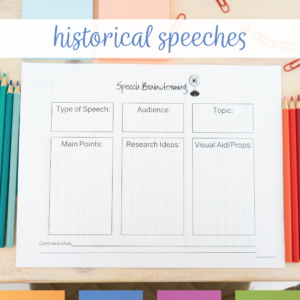
Historical Speeches
Teaching informative speeches in March is perfect timing concerning classroom community. Students are familiar enough with their teachers and classmates to somewhat relax during presentations. They are not so involved with summer plans that they won’t focus. Research for historical speeches and the presentations is a staple for my March language arts activities.
Informative speeches lend themselves to student choice. Plus, while excitement is high about basketball during March, public speakers can choose an athlete or sports team. March public speaking engages students in research and analysis, as they delve into the historical context of famous speeches. By studying the techniques and delivery of influential speakers, students develop their own public speaking skills and gain a deeper understanding of the power of words.
Morning Work
Ok: What many teachers call “morning work” also classifies as “do-nows” or “bell-ringers.” Whatever the title, a classical classroom tool is an activity each student begins as they enter the classroom.
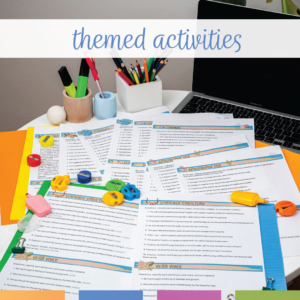
Often, such independent practice for my classes is spiral grammar. (I’ve written about the benefits of spiraling language arts skills.) Spiral review is a better way than chugging along and reviewing when kids get behind; the review is naturally build in.
A great way to keep classes on track is to address life outside of school with themed activities. These spring grammar activities are the perfect way to address the changing world while staying focused in class.
March ELA
March language arts activities can keep your classes on track while paying attention to students’ excitement from outside forces. With a dash of interest in outside forces, classroom management will improve.
During March, inspiring your students can be a powerful tool in fostering their love for learning. One way to do this is by acknowledging their excitement for the upcoming warm weather and break. Incorporating their enthusiasm into class lessons not only engages them but also promotes social-emotional learning and builds a strong community of learners.
Next month is April, National Poetry Month. Check out my ideas for easy planning.